A pixie haircut can change the way your face, hairline, and neck are visible, which is why face shape gets so much attention in the decision. It is still only one part of the picture. Hair density, growth direction, crown volume, fringe preference, and how you feel about regular trims will usually determine whether a short crop becomes a favourite or a stressful experiment.
Start with hairline and density
Before choosing a pixie haircut, look closely at the hairline and the way the front grows. A strong cowlick, a widow’s peak, fine temple areas, or a fringe that naturally lifts will affect how short the front can go. None of these traits rule out a crop. They simply influence whether the style needs a longer sweep, a broken fringe, or a little extra weight near the hairline.
Density matters because pixies expose the internal architecture of the haircut. Fine hair can look beautifully full with a compact shape and a controlled amount of crown lift, but removing too much can make it seem transparent. Dense hair may need thoughtful internal weight removal so that the silhouette stays close enough to show its intended line rather than becoming round and bulky.
Bring your hair as you normally wear it. A photograph of a freshly smooth blowout is less helpful than the day-to-day growth pattern. Your stylist should be able to point out which areas will spring up, lie flat, or need direction. That observation is more valuable than trying to match a face-shape chart.
Choose a pixie silhouette
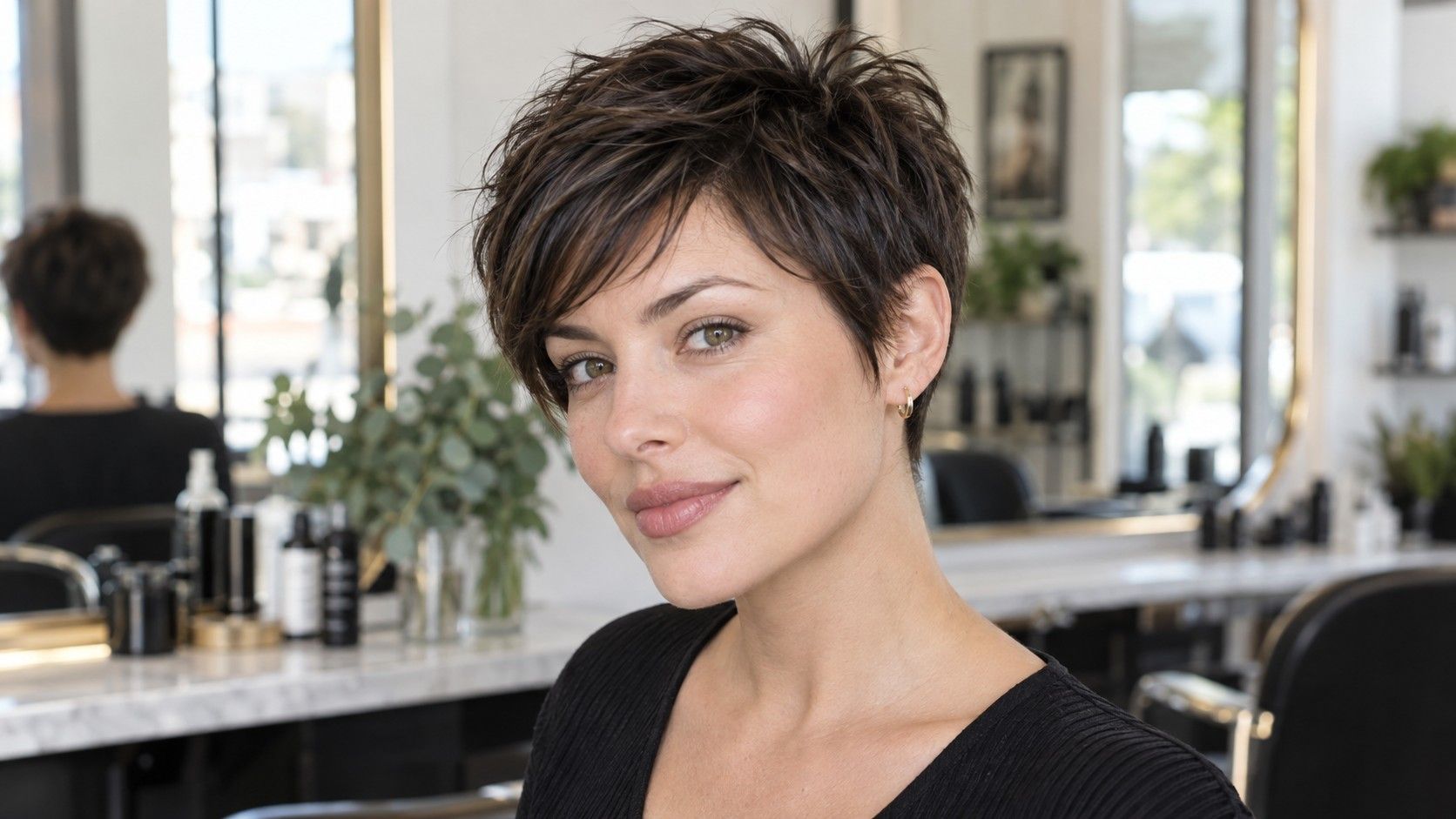
There is no single pixie. A close crop has a compact outline and puts the focus on the face and neckline. A longer pixie keeps more movement through the top and front, often making it easier to change the part or tuck a fringe back. A bixie sits between a bob and a pixie, with a softer perimeter and a less abrupt first step into short hair.
Choose the silhouette by asking what you want to see in profile. A rounded crown, a flatter top, a longer nape, and a clean tapered neckline all create different balances. Face shape can guide the conversation, but profile, neck length, and hair density are often more revealing. Ask to look at reference photos from the side and back, not only from the front.
If you have never worn short hair, a longer pixie is often a practical entry point. It lets you experience the exposed ears and shorter nape while retaining enough top length to restyle. Starting longer does not mean settling; it gives you information before deciding how close you want the next appointment to go.
Use fringe strategically
Fringe is one of the most flexible controls in a pixie. A soft side-swept front creates a diagonal and leaves room for a changing part. A short textured fringe makes the haircut feel more open and graphic. A longer piece over the forehead can make a crop feel gentler while giving you something to play with when the rest is very short.
Use it for preference, not correction. If you enjoy showing your forehead, a short crop can be liberating. If you prefer a little frame around the eyes, keep more length through the front. The correct choice also depends on whether you will use a dryer or a small amount of paste in the morning; fringe that looks effortless in a photo has usually been directed on purpose.
Ask the stylist to explain how the fringe will change as it grows. On a pixie, a few millimetres can turn a neat front into a section that falls in the eye. Knowing whether it will sweep, split, or blend into the side helps you decide how frequently you are comfortable returning for trims.
Crown volume and nape details
Crown volume can make a pixie feel lively, but it needs to be placed deliberately. Too much height on a narrow base can create a tall silhouette; too little can make fine hair look pressed down. The goal is usually a shape that follows your head rather than a generic spike. A small amount of lift at the crown may be plenty when the rest of the cut is compact.
The nape is the area many people forget to discuss until it grows out. A tight tapered nape looks crisp and can feel wonderfully light, but it asks for more frequent maintenance. A softer, longer nape grows out more gently and may suit someone who cannot visit the salon every few weeks. Neither choice is minor; it changes the whole back view.
Texture at the nape and crown should be shown to you in the mirror before you leave. Run your hand through the cut and see how it settles without product. A short haircut should have a sensible resting shape, even if you also enjoy styling it into something sharper for an evening out.
Plan the grow-out before the first cut
A pixie does not have to be a permanent identity, but it does have a rhythm. Short areas become noticeable quickly, especially around the ears and neckline. Many people schedule a clean-up every four to seven weeks, depending on the contrast in the cut and how precise they like the outline. Build that time and cost into the choice rather than treating it as a surprise.
The grow-out can be attractive when it has a plan. A longer top can become a side-swept crop, then a bixie, then a short bob. The difficult stage is usually not length itself but uneven length: the nape grows fast while the crown needs time. Periodic shaping keeps the transition intentional without repeatedly cutting away all progress.
For the first consultation, say whether you want a close crop, a longer textured pixie, or simply the best hair cut and color for me after looking at your current hair. Mention how much styling time you enjoy and whether you are prepared for regular trims. A good stylist will translate that information into a silhouette you can live with, not a one-day transformation.
Take a few photos of the result after you have styled it yourself, including the back and both profiles. They make it easier to see what you want adjusted next time: perhaps more softness at the nape, a longer fringe, or less height through the crown. A pixie is unusually responsive to small refinements, so the second appointment is often where the haircut becomes genuinely yours.