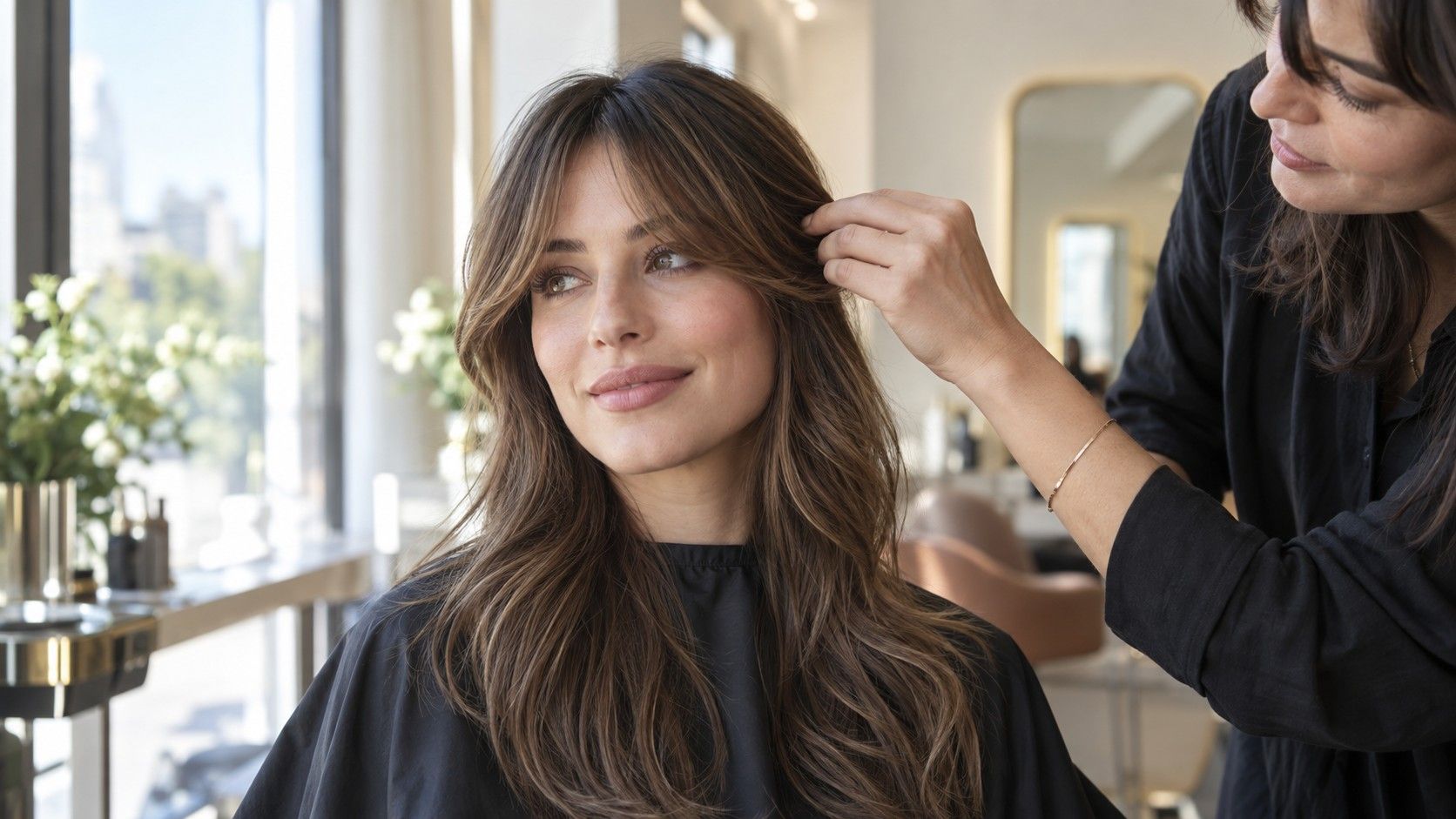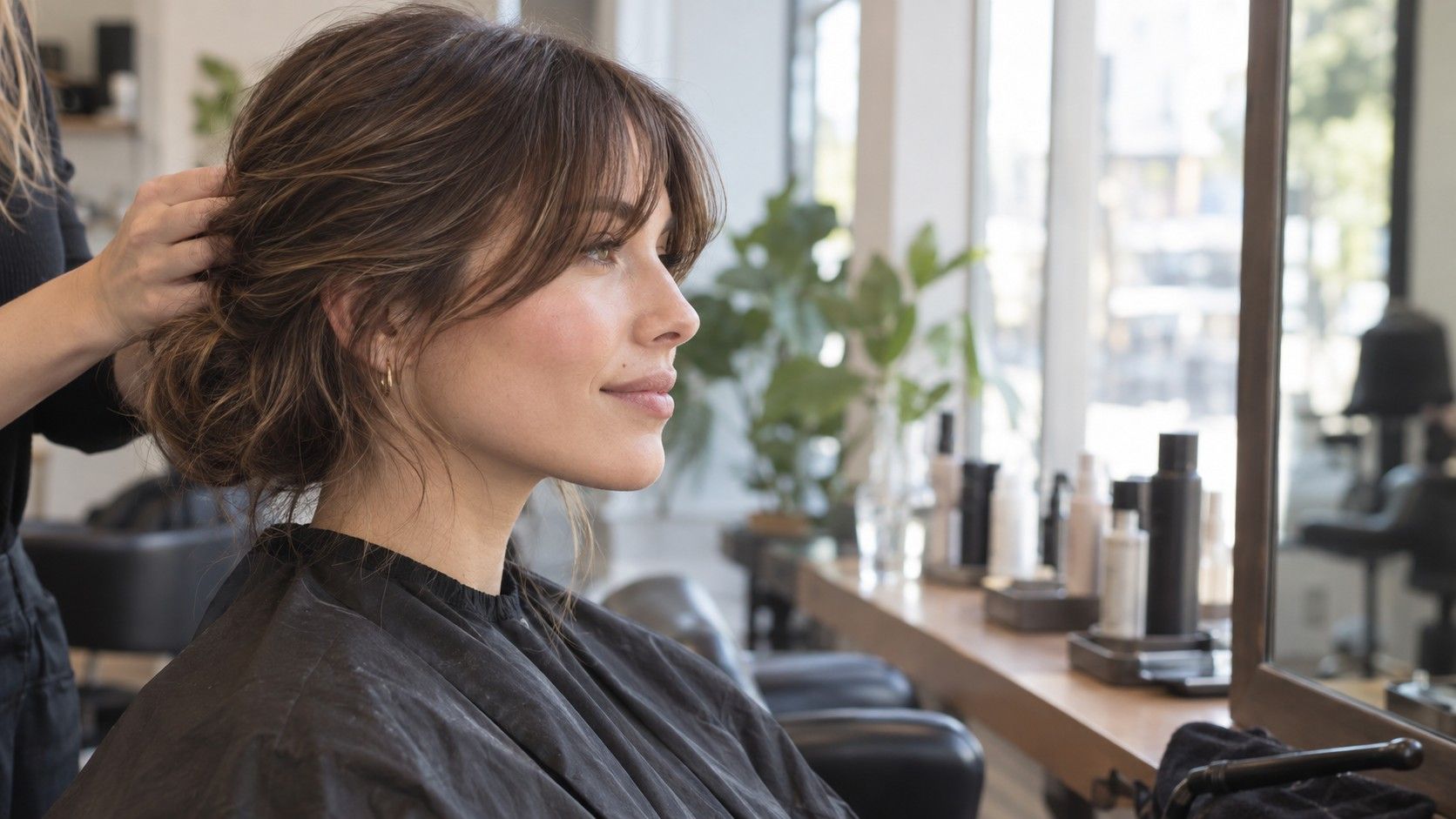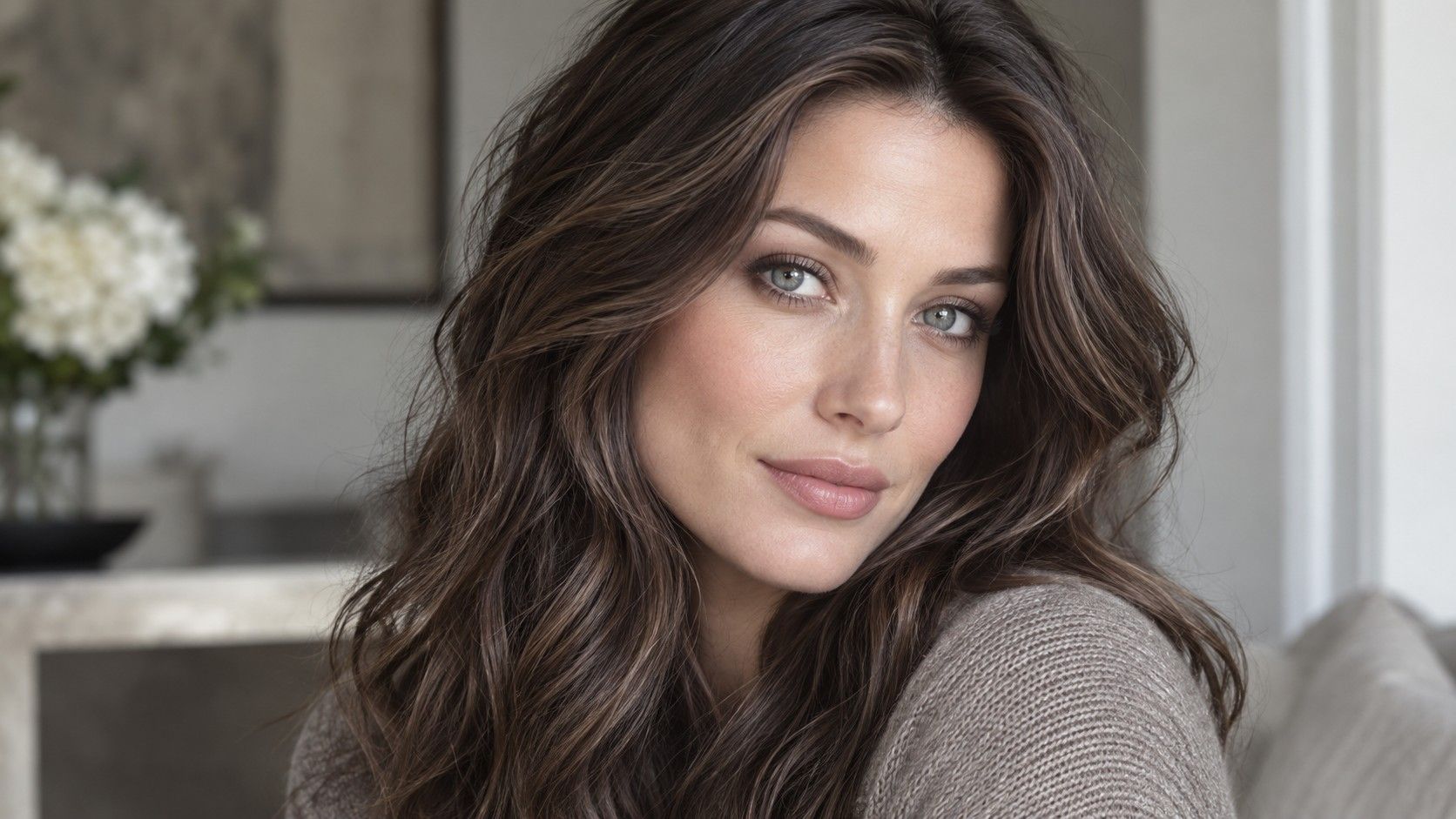
Grey eyes are less a single color than a moving target. In a cool room they can look pewter; beside a warm sweater they may pick up green, blue, or a faint amber ring. That is why the best hair color for grey eyes is rarely found by matching a shade name to an eye-color chart. The useful question is what makes the eyes look clearer while the skin still looks rested.
Read your grey-eye pattern before choosing a formula
Many grey eyes have a dominant cast. Blue-grey eyes tend to look particularly crisp next to cool beige blonde, ash-leaning brunette, espresso, or a restrained smoky brown. Green-grey eyes can carry more warmth, so muted copper, soft chestnut, and dark blonde with golden beige ribbons can make the green show without turning the overall effect orange. Pure-looking silver grey eyes often suit shades that keep some coolness at the root and avoid a heavy yellow finish through the ends.
There is also the question of the ring around the pupil. A golden or hazel ring does not require a warm all-over color, but it can make a few soft honey or caramel pieces feel more connected than a solid icy blonde. A blue outer ring can make a cool brown look elegant rather than severe. Take two or three daylight photos from the same distance; a salon mirror with overhead lighting often exaggerates warmth and makes a color decision feel more certain than it really is.
Eye color should not be treated as a rule book. Grey eyes can look striking beside almost any family when the depth is right. The more reliable filter is whether the color competes with the skin. If a shade makes under-eye shadows look stronger, it may be too dark or too cool even if it makes the iris look dramatic. If the eye color disappears, the hair may be too bright, too yellow, or too close to the skin value.
Choose warmth deliberately instead of by default
Cool shades are often recommended for grey eyes because they echo silver and blue notes. Mushroom brown, taupe brunette, cool cocoa, pearl blonde, and sandy beige can all work beautifully when the complexion has pink, neutral, or cool undertones. Their advantage is restraint: they create definition without making the eyes look artificially blue. The risk is overcorrecting into grey-beige hair that leaves the face flat, especially on naturally warm or olive skin.
Warmth can be just as flattering when it is chosen with a light hand. A muted cinnamon brown, tawny blonde, copper glaze, or warm chestnut can pull green or gold flecks forward. The key word is muted. Very bright orange copper or dense buttery yellow can overwhelm soft grey eyes unless the person already has high natural contrast. Ask for warmth that is visible in movement rather than a solid block of it at the hairline.
Neutral shades are useful when your skin seems to tolerate both silver jewelry and gold jewelry, or when your eye color changes strongly with clothing. Beige blonde, neutral chocolate, bronde, and soft auburn offer room to adjust later. A gloss can cool or warm the finished color without committing to another full lightening session. This makes neutral hair color a practical choice for someone who likes variety and does not want their eyes to dictate every wardrobe color.
Match depth to the contrast in your face
Depth matters more than most shade boards suggest. Fair skin with pale brows and light grey eyes often looks most balanced with dark blonde, medium beige blonde, soft light brown, or carefully placed lowlights. A nearly black dye can create impressive eye contrast in a photograph, yet it may make the skin look translucent and turn maintenance into a root-line problem within weeks. A softer root shadow can deliver the same focus with less severity.
If your natural brows are medium to dark, or your features have clear contrast, richer colors can give grey eyes a frame. Cool medium brown, mocha, dark chocolate with a neutral gloss, and deep auburn are common starting points. Rather than choosing the darkest swatch, compare it with your natural root in daylight. Going one or two levels deeper is usually enough to make a grey iris look sharper; going four levels darker changes the whole face and should be treated as a separate style decision.
For a high-lift blonde, preserve contrast somewhere else. A slightly deeper root, fine lowlights around the nape, or a brow color that still belongs to the face can keep grey eyes from looking washed out. Very pale blonde paired with very pale brows can be beautiful, but it needs intention. It is not an automatic result of bleaching; toner, makeup habits, and the condition of the hair all affect whether the effect reads polished or simply faded.
Compare useful shade families for grey eyes
Shade names change from brand to brand, so use them as directions rather than instructions. Bring visual references that show the depth and placement you like, not only a filter-heavy close-up. A colorist can translate a picture of cool brunette into a formula that accounts for your previous color, porosity, and how much warmth is sitting underneath. That translation is where many successful color changes are made or lost.
| Shade family | Why it can work | Watch for |
| Soft beige or pearl blonde | Brightens blue-grey and silver eyes without hard contrast | Too much yellow can dull the iris |
| Mushroom or cool cocoa brown | Frames grey eyes and suits neutral-to-cool complexions | Flat ash can make warm skin look tired |
| Chestnut or muted copper | Brings out green and amber flecks in changing grey eyes | Highly saturated orange may dominate soft features |
| Deep neutral brunette | Creates clear contrast for darker brows and stronger features | Black-brown can look harsher than expected |
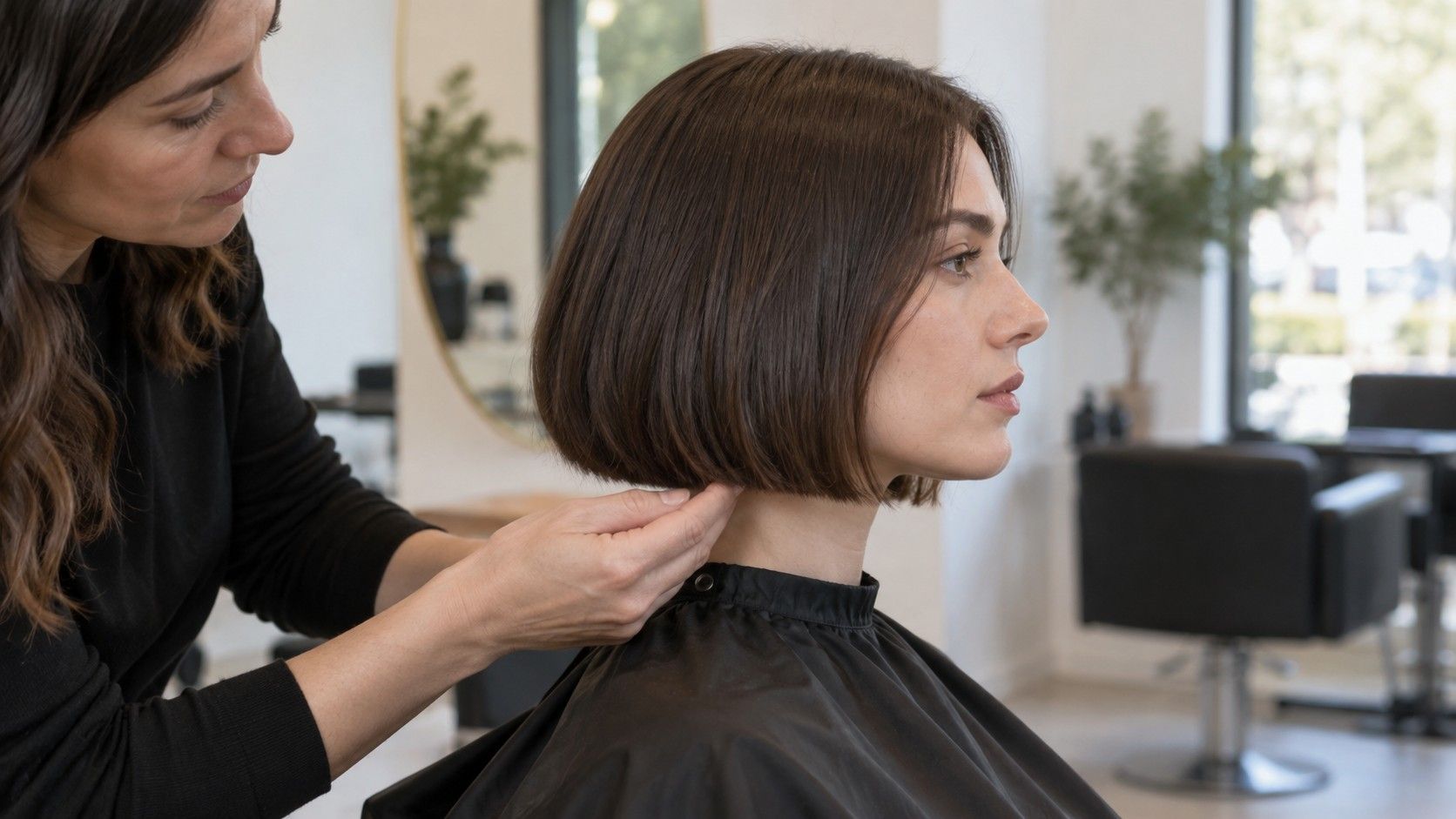
The table is not a ranking. A soft blonde can be wrong on one person and exactly right on another because the visible result includes haircut, roots, brows, skin depth, and daily styling. A straight, glossy bob shows color differently from loose textured hair, where warm and cool ribbons mix in movement. Think about the way you actually wear your hair before choosing a reference with a completely different finish.
Test a shade before a full appointment
A low-risk test often answers more than a long color analysis. Try a temporary root spray or a clip-in piece near the face, then take photos outside on an overcast day and in indirect indoor light. If you are considering warmth, a tinted gloss or a few face-framing highlights can reveal whether copper or caramel wakes up your eyes. If you are considering darker brown, ask for a demi-permanent gloss first; it fades more gently and shows whether the depth feels like you.
At the consultation, describe what you want to notice in the mirror: clearer eyes, less redness in the skin, a stronger brow line, or a softer overall look. That gives the colorist a useful goal. Saying only that you want the best hair color for grey eyes can lead to a generic ash-blonde recommendation, even when your skin and natural contrast point somewhere else.
Finally, plan for upkeep. Pale blondes may need toning when they turn brassy; reds and coppers usually fade fastest around the hairline; deep brunettes show a lighter natural root quickly. A shade that flatters grey eyes but requires a salon visit every three weeks may not be the best choice for your routine. The most convincing color is often the one that still looks intentional after an ordinary month of washing, weather, and rushed mornings.