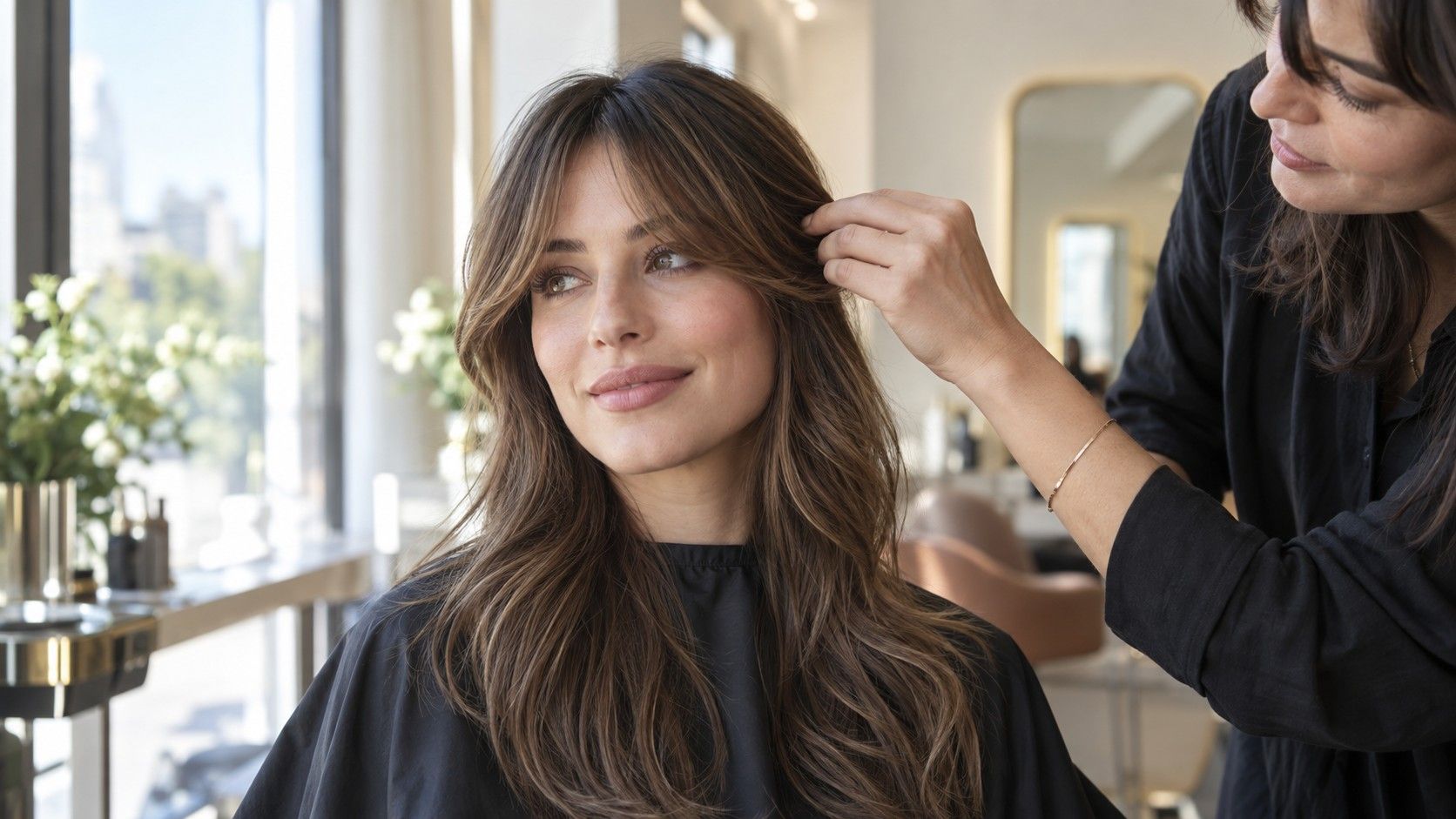
Bang length is the detail that turns a good haircut into either a daily pleasure or a small recurring nuisance. A fringe that lands one centimeter too short can feel startling; one that drops into the eyes can make you reach for a clip before lunch. That is why a bangs length chart is less useful as a strict diagram and more useful as a shared language for the salon chair. You are choosing where the fringe meets your eye line, how it behaves when dry, and how much maintenance you are willing to accept.
Decide where you want the eye line
Use visible landmarks when describing fringe length. A micro fringe sits well above the brows. A short fringe may rest around the upper brow. Brow-length bangs skim or cover the brows. Lash-length bangs reach the eye area and are more likely to separate, sweep, or become annoying without styling. Longer fringe begins to blend into cheekbone and curtain-bang territory.
Brow-length is popular because it can feel balanced without taking over the face. But “at the brows” needs a follow-up question: at the brow when the hair is freshly blow-dried, or when it is air-dried and has its natural bend? If you have a strong wave at the front, a fringe cut wet at eyebrow length can jump upward once dry. Ask for the final line to be checked in the way you normally wear it.
Consider what you want to see when you look in the mirror. A full blunt fringe creates a horizontal line near the eyes. A soft, broken edge allows more forehead to appear. A longer center that grazes the lashes can be pretty in photos but asks for more control in daily life. Tell the stylist whether you want your brows visible, partly visible, or fully covered. That small preference gives the cut an actual target.
Account for texture and shrinkage
Texture is not a footnote in a bangs length guide. Straight fine hair often falls longer and separates more easily, especially if the fringe is cut too sparse. Thick straight hair can form a heavy curtain if the density is not distributed. Wavy hair may shrink unpredictably depending on humidity, while curls can shorten by several visible centimeters as they spring into shape.
For wavy or curly bangs, ask for the fringe to be assessed dry or at least rechecked dry. A curl-by-curl approach may make more sense than a single wet line. The aim is not to force every strand to land at exactly the same point; it is to create a silhouette that looks intentional when the texture does what it naturally does. A slightly longer starting point is usually kinder than cutting to the shortest possible version immediately.
Cowlicks are especially important at the hairline. A centered cowlick can push bangs apart, while one at the temple can lift one side. They do not rule out a fringe, but they influence the best length and density. Curtain bangs or a longer side-swept shape may work with the growth pattern more easily than a dense blunt line. Point out the cowlick before the shampoo, while it is still visible.
Curtain-bang lengths
Curtain bangs are not one length. The shortest center section may sit around the brows, the bridge of the nose, or even the upper cheekbone, while the outer pieces continue toward the jaw. The gradual opening creates the curtain effect. Because they are longer and softer than a blunt fringe, they can be easier to grow out and easier to tuck, though they still need styling to get that familiar sweep away from the face.
A short curtain fringe with a brow-length center creates more of a clear bang moment. It can feel fresh and open if your hairline cooperates, but it will need regular shaping. A longer cheekbone-starting curtain fringe is more of a face-framing layer. It gives movement through a center or off-center part and often suits someone who wants to test bangs without committing to a solid horizontal line.
Bring photos showing your actual preferred parting. Curtain bangs styled over a center part can look completely different when you wear a deep side part. The stylist needs to know whether you will blow-dry the front with a round brush, use rollers, or let it air-dry. A fringe designed for a polished blowout may collapse in a different pattern when left alone.
How quickly a fringe grows out
Hair growth is variable, so exact promises are not helpful. What is predictable is that bangs feel different quickly because a small amount of length changes where they land around the eyes. A brow-length fringe may need a light cleanup before the rest of the haircut needs attention. If you dislike trimming between appointments, choose a longer, softer edge or curtain shape that can move through several lengths gracefully.
Ask about the trim schedule before the scissors come out. Some salons offer quick fringe trims, while others build them into a regular cut schedule. If you plan to maintain bangs at home, be cautious. A tiny adjustment on dry hair is safer than taking a wide wet section and trying to recreate a salon line. The most common home-trim problem is not one imperfect snip; it is repeatedly correcting it until the fringe is much shorter than intended.
Growing out bangs is easier when the original shape has side pieces to blend into layers. A blunt fringe can still be grown out, but it may pass through an awkward lash-length stage. Clips, a soft side part, and a little root lift can help it look deliberate. The goal is not to avoid every awkward week. It is to choose a starting length and shape that gives you options when your mood changes.
What to say at the appointment
A practical request sounds something like this: “I want a soft brow-length fringe when dry, with the brows still partly visible. My hair has a wave at the front, and I usually wear a center part. Please leave it long enough to see how it settles before taking more.” That tells the stylist where you want the eye line, what texture has to be respected, and that you value an adjustable result.
Bring your usual glasses if you wear them and arrive with your natural part visible. If you know that you will not style bangs daily, say so plainly. A good fringe can be low effort, but no fringe is maintenance-free. The best length is one that behaves acceptably when you have five minutes, not only when it has been blow-dried perfectly for a photo.
Choosing bangs is a small design decision with a surprisingly large effect. Think in landmarks, allow for shrinkage, and leave yourself a little room. A fringe that you can live with is more useful than a dramatic one you have to fight every morning.