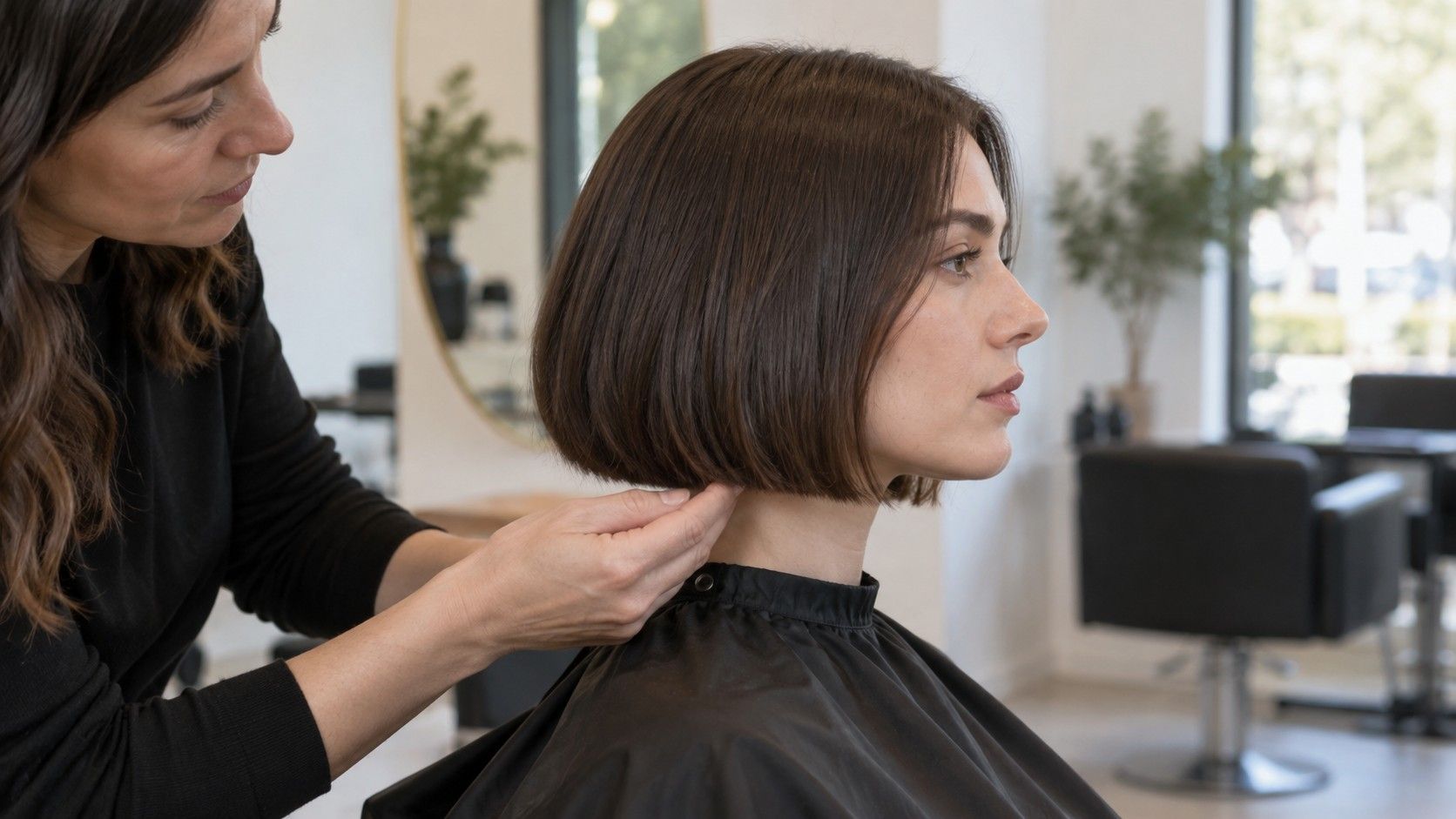
A bob is not one haircut with a single correct endpoint. It is a family of shapes, and the place where the line stops changes the entire effect. A cut that skims the lips can feel playful and sharp; one that rests at the collarbone can feel calm, versatile, and almost long. The helpful question is not which bob length is universally flattering. It is where you want the haircut to create width, reveal the neck, move when you turn your head, and sit on a regular morning.
Measure a bob in facial landmarks
The most useful landmarks are the cheekbones, corners of the mouth, chin, jaw, nape, base of the neck, and collarbone. Instead of saying “short bob,” say where you want the front to land when the hair is dry and naturally styled. A front that hits the chin can make the jaw a focal point; a front that passes the jaw and reaches the upper neck creates a more elongated line without becoming a lob.
Also decide whether the front and back should be the same length. A slight forward angle is common because it leaves a little more visual length around the face while keeping the nape neat. A blunt, level line feels more graphic. Neither is inherently better, but they grow out differently. The more dramatic the angle, the more obvious it can become when the haircut loses its original shape.
Texture changes the measurement. Wavy and curly hair can spring above the intended landmark once it dries, while fine straight hair may settle longer than expected. A stylist who asks how you normally wear your part and whether you air-dry has not wandered off topic; those details decide where the perimeter really ends.
Take measurements with the hair in the conditions you actually live with. Humidity, a centre versus side part, and whether you wear the front tucked can all shift the visual endpoint by more than a ruler suggests. A quick photo from the side after your usual styling is often the clearest way to agree on the length before the first cut is made.
Chin-length bobs
A chin-length bob is the version most people picture first. It can land just below the lips, at the chin, or slightly under it. The result is deliberate and visible from every angle, which is why it works beautifully for someone who enjoys a haircut looking like a haircut. It also puts the focus near the jaw and mouth, so the fringe, parting, and amount of side volume have an outsized effect.
French bobs tend to sit around this territory, often with a softer fringe and a little bend through the ends. They do not need to be perfectly blunt. In fact, a barely textured perimeter can make a short bob feel less helmet-like on medium to thick hair. On fine hair, a stronger baseline may make the ends look fuller, with light internal shaping rather than aggressive layers.
The trade-off is styling. A chin-length bob can flip outward, tuck under, or expand at the sides depending on texture. That can be charming if you like a lived-in result, but less appealing if you expect one quick brush to create a polished curve. Ask your stylist to show you the cut both smooth and with its natural movement before deciding how blunt the line should be.
Jaw and neck-length bobs
A bob that ends below the jaw and above the shoulders is a useful middle ground. It still has the identity of a short haircut, but it offers more room for tucking behind the ear, bending with a brush, or adding a small wave. This range can include the classic neck-length bob, where the back is clean at the nape and the front settles around the jaw or upper neck.
This is often the most adaptable bob length for someone moving from longer hair. It can be cut blunt for density, softly graduated for a stacked shape, or layered lightly for natural wave. The difference is not merely technical. A stacked back adds built-in lift but may need more frequent reshaping; a blunt neck-length bob grows out more quietly but can feel heavier on very thick hair.
When saving a reference, notice the nape. The back of the haircut is where a bob’s maintenance becomes obvious. A closely shaped nape can look elegant for weeks, then suddenly look grown out. A more relaxed neckline gives you a longer appointment interval. Neither should be a surprise after the cape comes off.
Collarbone bobs and lobs
At collarbone length, the bob becomes a lob. It retains a defined perimeter but has enough length for a low ponytail, a half-up style, and more variation in waves. For many people, this is the practical answer to wanting a bob without surrendering every styling option. The hair still feels lighter and more intentional than a long layered cut, yet it can be pulled back for work or exercise.
A collarbone lob needs a line that works with your shoulders. If it ends exactly at a point where the hair flips out, a tiny adjustment can make daily styling easier. The front may be left slightly longer than the back to avoid a bulky triangular silhouette, especially on thick or wavy hair. Fine hair may benefit from a stronger blunt edge and fewer layers so the perimeter does not disappear.
Do not assume longer means lower maintenance in every way. A lob may be easier to tie back, but it can still need a trim to keep the baseline crisp. Its advantage is flexibility. If you later decide to grow it, the journey is far less dramatic than growing out a chin-length cut.
Choose for your routine, not a diagram
Before a bob appointment, say how much time you spend styling, how often you wear glasses or tuck hair behind your ears, and whether you need a ponytail. These are not minor preferences. They decide whether a chin-length line will delight you or annoy you by Thursday. Mention cowlicks at the nape and a strong natural part, too, because both can redirect a neat bob once it dries.
Bring a few photos that share the same length but show different textures. Then point to the exact endpoint you prefer. A good stylist can translate “just below my jaw when dry, with enough length to tuck, not a stacked back” into a cut far more reliably than “I want a bob.” The right place to stop is the one that works when the blowout is gone, the weather has changed, and you are still happy to see it in the mirror.