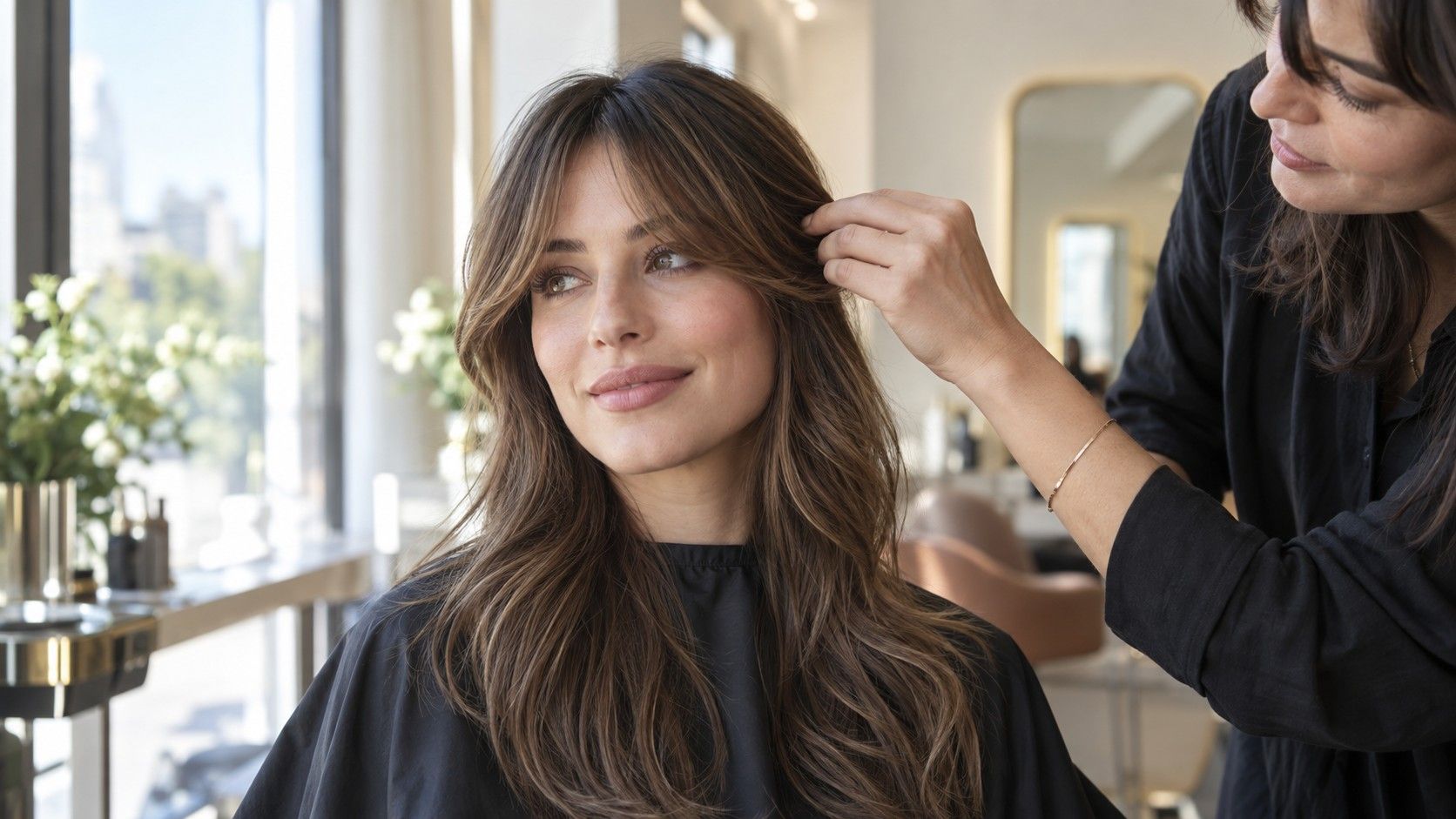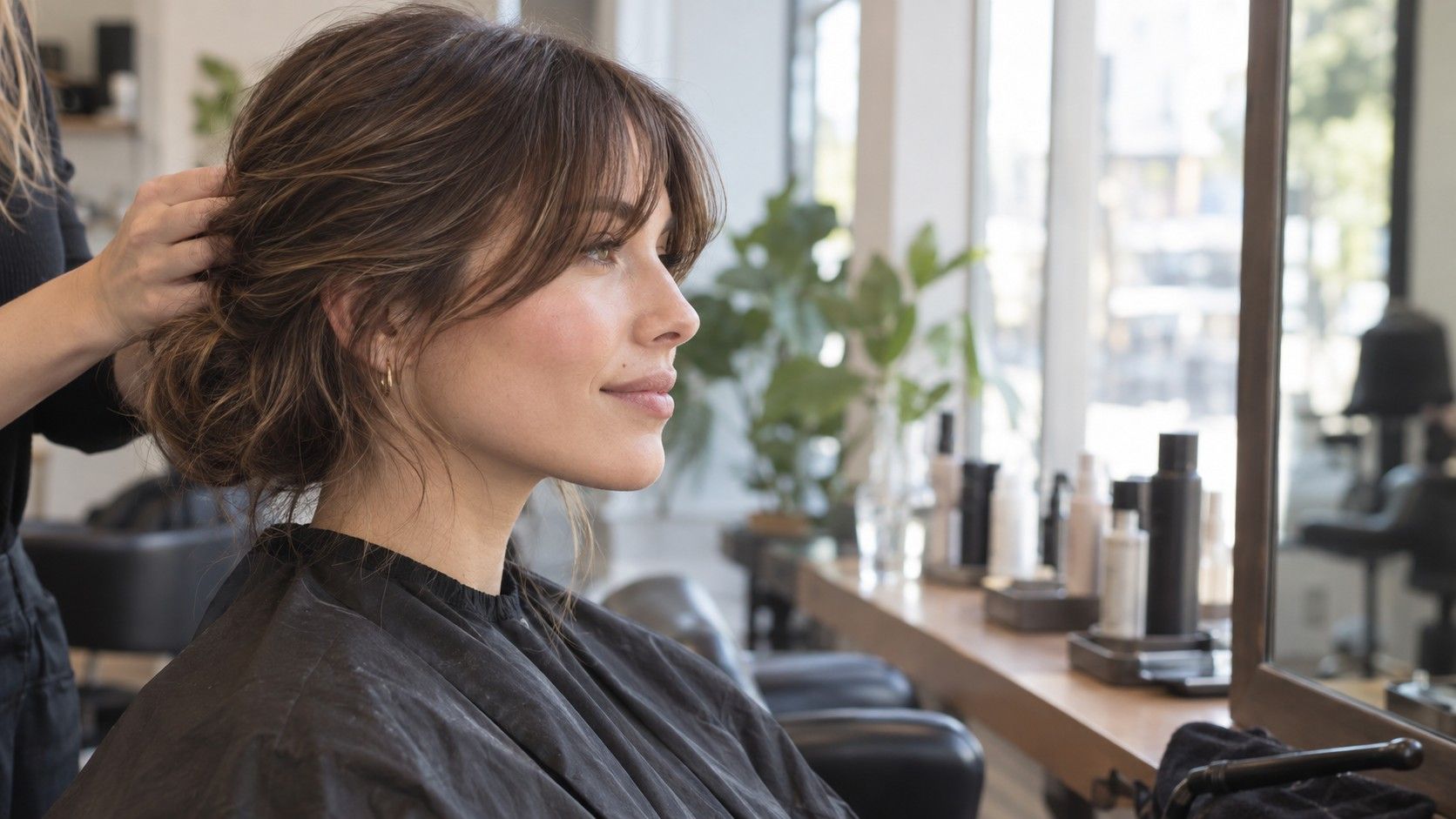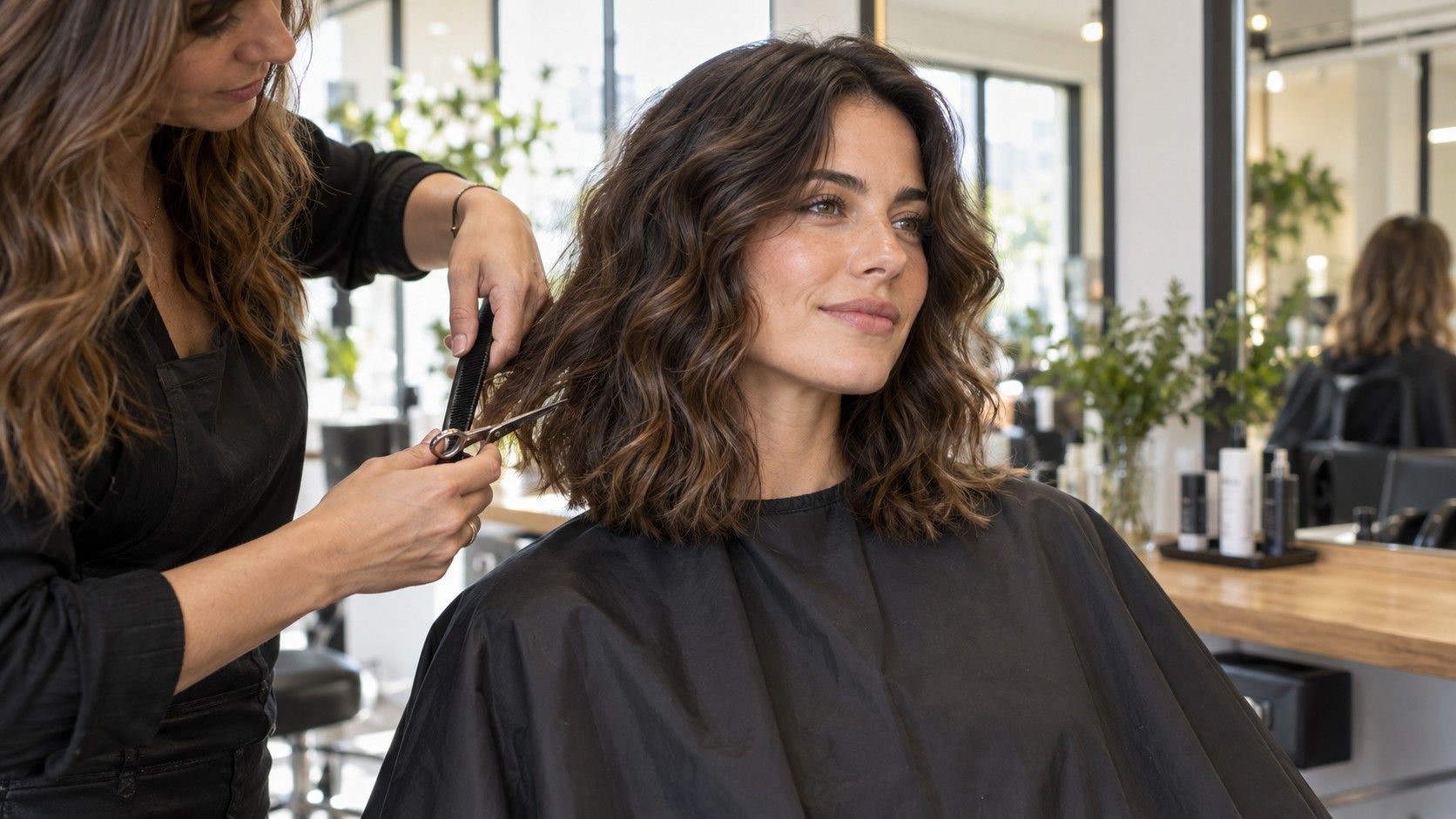
The best haircut for wavy hair is usually decided before a styling product reaches the bathroom shelf. Waves respond to weight, layering, length, and drying habits, so a cut that looks perfect when brushed smooth can behave very differently once it is left to bend and expand. Start with the natural pattern, then choose a shape that gives it room to work.
Identify your wave before choosing a cut
Wavy hair is a broad category. Some hair forms a loose S-shape only around the ends; some bends from the root and becomes almost curly in humid weather. Density adds another layer: a fine wave can collapse under too much length, while dense hair can widen dramatically when short layers remove too much weight. A useful consultation begins with hair that has been worn naturally, not freshly straightened.
Look for consistency across the head. The nape may be straighter than the crown, and the front may bend differently from the back because of heat styling, colour processing, or a changing part. A haircut needs to respect those differences. Copying a single curl pattern from a photograph can lead to uneven results when your own wave settles in several directions.
Think about your wash rhythm and climate. If you wash at night and air-dry, a shape that relies on a controlled round-brush finish may become frustrating. If you happily diffuse or refresh with water each morning, you have more options for layers and volume. The best cut for wavy hair should match the routine you will actually repeat.
The role of the weight line
The weight line is the visual point where hair looks most solid, often around the ends of a bob or a one-length cut. On waves, it helps determine whether the shape looks deliberate or turns into a broad, fuzzy triangle. Leaving a useful amount of weight can anchor the pattern, especially in medium-to-thick hair that expands as it dries.
A blunt baseline is not automatically bad for waves. It can make fine hair look fuller and give soft waves a modern, calm outline. The trade-off is that very blunt ends may feel heavy on dense hair or make a strong wave stack outward. Small internal adjustments can remove bulk without shredding the perimeter into thin, frizzy ends.
Before agreeing to lots of layers, ask what they are meant to accomplish. Layers can encourage lift, distribute density, and reveal movement, but too many can create a cloud of short pieces with no shared shape. The answer should mention your specific density and the point where your wave starts, not a generic promise of “more texture.”
Layering without fluff
For wavy hair, the most successful layers often begin lower than people expect. Keeping the top relatively connected can prevent the crown from puffing up while allowing movement through the mid-lengths and ends. Face framing may start near the cheekbone or jaw, depending on where you want the wave to open. It should be checked dry, because a wet section can spring several centimetres upward.
A shag can be brilliant for a pronounced wave and a person who enjoys visible texture. It is less magical for someone who wants a quiet, polished outline with minimal styling. The same is true of a heavily layered wolf-style cut: it can create personality and lift, but it asks the hair to show up every day. Be honest about whether you want that energy at 8 a.m.
A bob with soft, selective layers is often easier for a loose wave. It preserves a recognisable silhouette while avoiding the shelf-like effect that can appear when every strand ends at the same point. If you are nervous, start with fewer layers. It is easier to add movement at the next appointment than to grow back a top section that has become too light.
Dry cuts, wet cuts, and honest testing
A dry cut can be useful for wavy hair because it lets the stylist see the pattern, shrinkage, and uneven density in real time. It is not the only valid method. Many stylists cut a foundational shape wet and then refine it dry. What matters is that there is a deliberate dry assessment before the haircut is considered finished.
Arrive with clean hair and little product if the salon asks for a natural texture appointment. Heavy oils, stretched-out waves from a tight ponytail, or a freshly flat-ironed front can obscure the information the stylist needs. If you normally diffuse, say so, because the cut should be evaluated in a finish close to your real life.
Testing the cut means more than admiring it under salon lights. Ask how it will be refreshed on day two, whether the front pieces need a particular brush, and where the part should sit. A stylist who can demonstrate a simple method is giving you something more valuable than a temporary perfect finish.
How to talk with a stylist
Bring pictures that show hair with a texture close to yours, then describe the practical result you want: more width, less bulk at the bottom, a bob that does not flip unpredictably, or layers that still look good when air-dried. Mention your colour history and any damaged sections. Chemically lightened ends can behave like a different texture and may need a gentler plan.
Ask where the shortest layers will be, how much weight will remain at the perimeter, and whether the style is intended for air-drying or heat styling. Those are concrete questions, and the answers will reveal whether you and the stylist mean the same thing by “soft layers” or “a shag.”
Before committing, look at the style from the side and at the back as well as straight on. The front view gets most of the attention online, while the profile reveals whether the weight sits where you want it and whether the neckline will feel comfortable as it grows. A good cut gives you a workable version at home, not only a strong first photograph in the salon.
For the first week, resist judging the cut after a single wash. Wavy hair may need one or two wash-and-dry cycles to settle, particularly if it was cut after being styled in a different direction. Note where it expands, which pieces turn unexpectedly, and whether the ends feel too light or too heavy. That gives the stylist useful, specific feedback at a follow-up appointment instead of the vague conclusion that the haircut simply does not work.