When people search for a haircut oblong face women can wear comfortably, they are usually trying to avoid a style that makes the face seem longer than it feels to them. A face-shape label is only a starting point, but it can be useful when it directs attention to width at the sides, height at the crown, and where the haircut ends.
Check whether oblong is the useful starting point
An oblong face is often described as longer than it is wide, with a fairly even outline through the forehead, cheekbones, and jaw. Real faces are less tidy than diagrams. Hairline height, cheekbone prominence, jaw width, and even the glasses you wear can change what you notice first. Use the label as a way to ask better questions, not as a verdict that bans entire categories of haircut.
Take a few photographs with the camera held at eye level and your hair pulled back loosely. This makes it easier to see where you naturally want more width or less height. Then put the hair down and notice its density. A fine, straight bob and a dense, wavy lob may land at the same length but create very different outlines.
The best haircut for an oblong face is one you can reproduce on an ordinary day. If a cut needs a wide, curled finish to achieve its balance, be candid about whether you will use a brush, rollers, or a styling tool. A lower-effort shape with a good natural outline is often the more satisfying choice.
Lengths that add visual width
Lengths around the chin, jaw, collarbone, and upper chest often give you useful places to build horizontal presence. That does not mean long hair is off limits. It means that very long, very straight hair with no layers or texture can emphasize vertical lines if it falls like two narrow curtains beside the face.
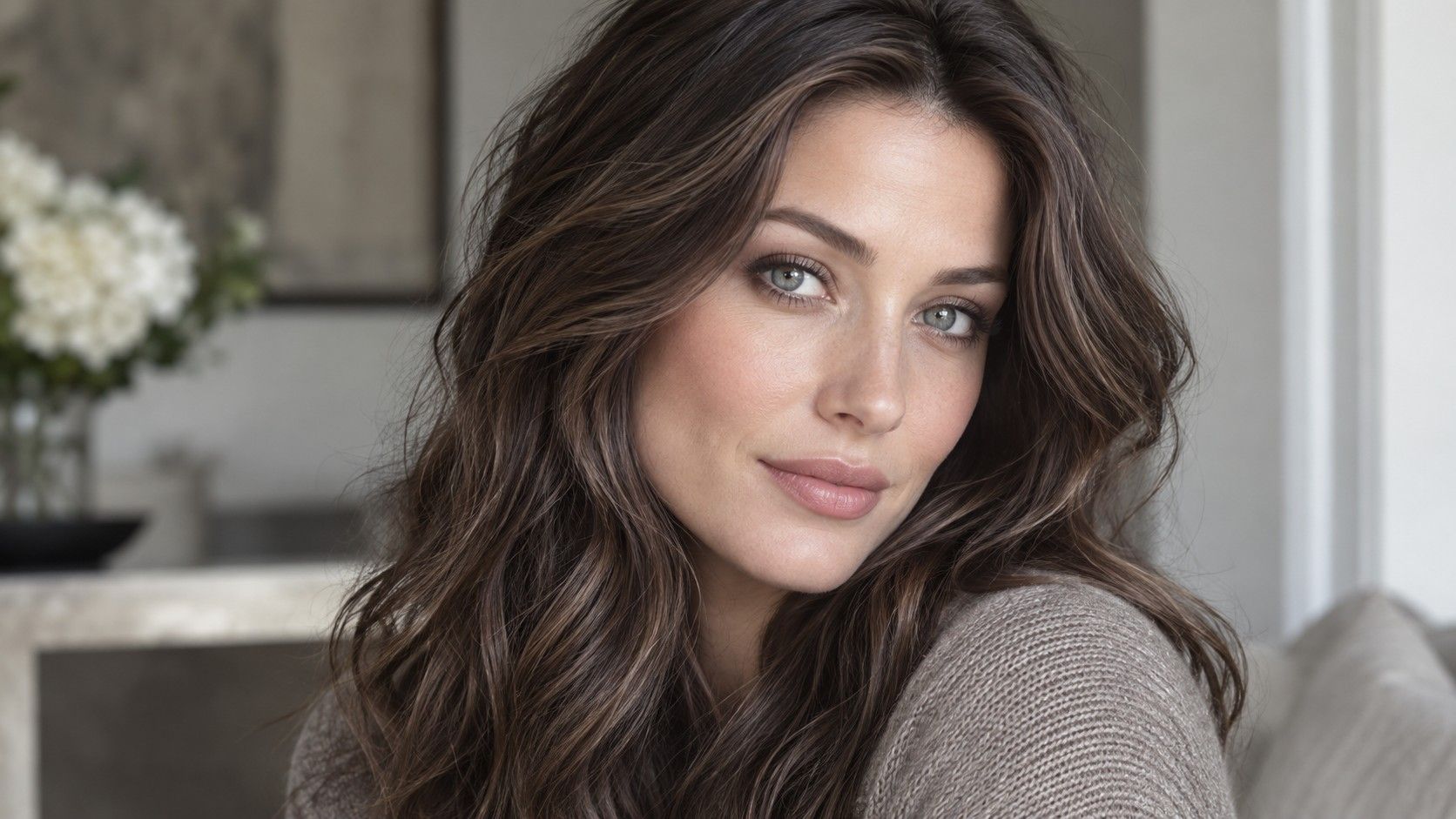
A collarbone cut with soft movement through the sides is a reliable middle ground. It keeps enough length for tying back while avoiding the visual pull of an uninterrupted, pin-straight sheet. The width should come from the way the hair sits around the cheeks and shoulders, not from a huge triangle of volume at the ends.
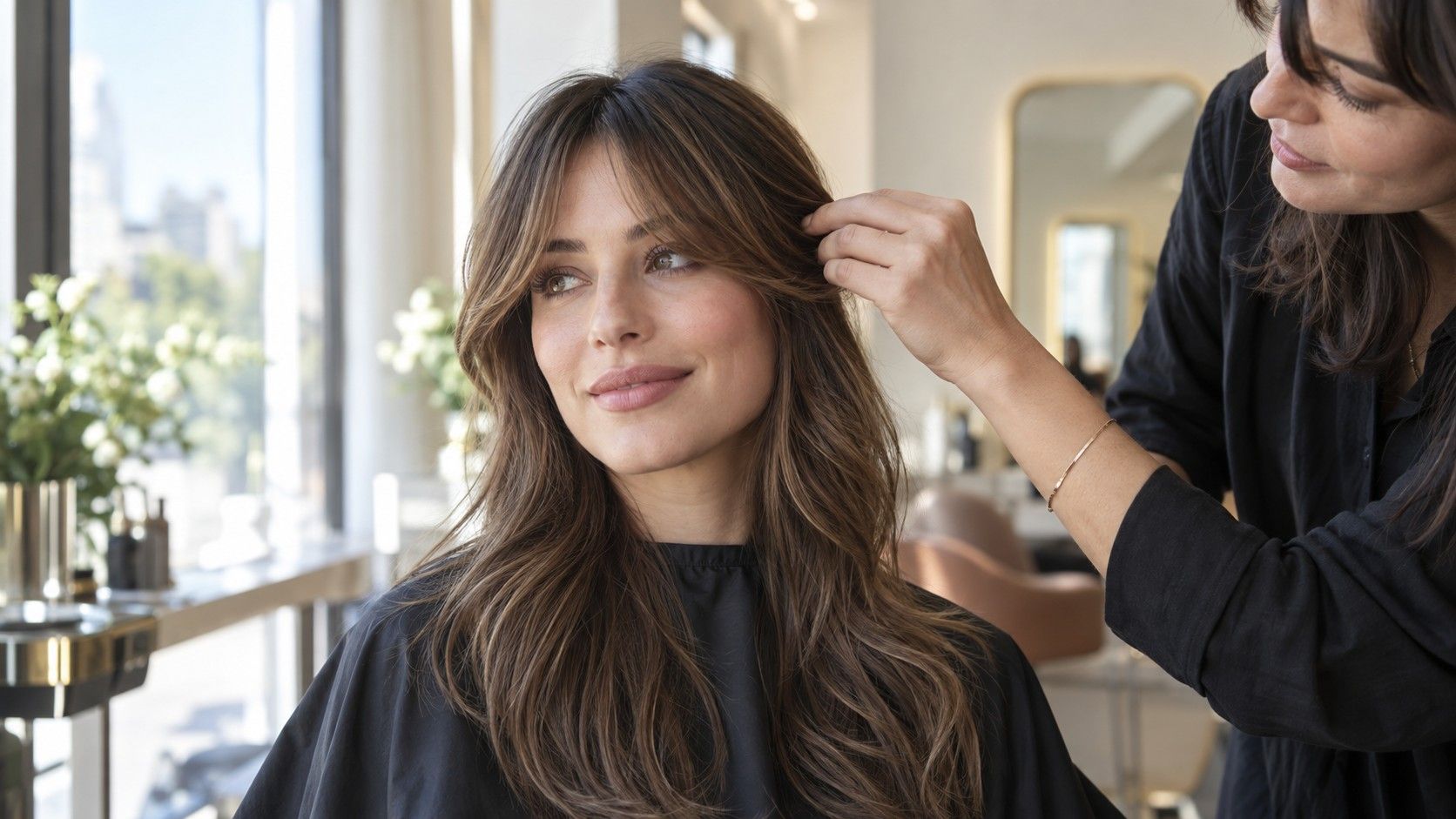
If you enjoy long hair, ask for face-framing layers that start where you actually want attention to move outward. Layers that begin at the chin or cheekbone can create a gentler transition. Very short layers concentrated at the crown, by contrast, may add height without adding side balance.
Bobs and lobs
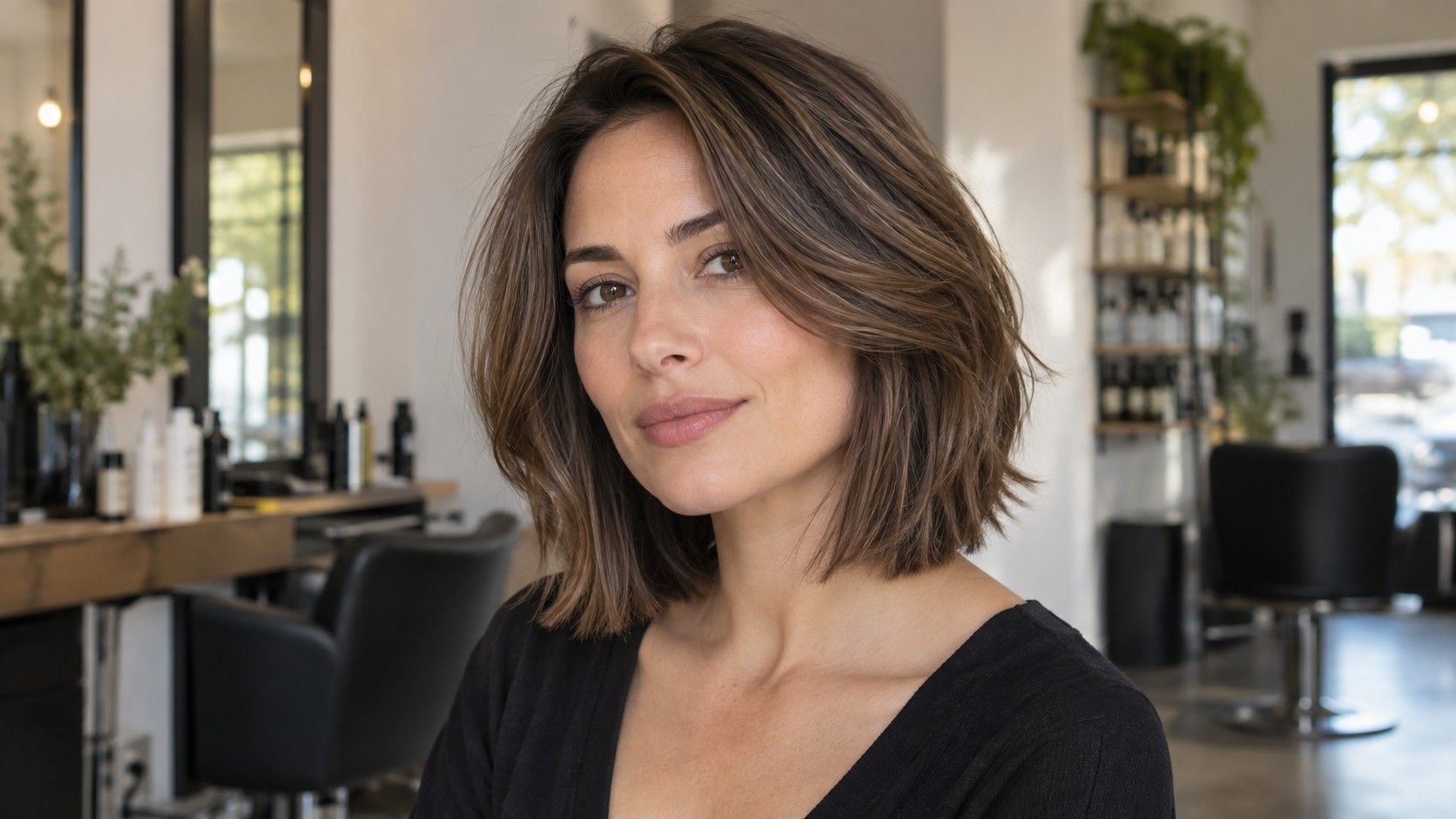
A bob haircut for an oblong face can be excellent because it gives the outline a clear lower boundary. The practical question is where that boundary hits. A very sharp cut exactly at the narrowest point of the jaw can look severe on some people, while a slightly longer bob with textured ends lets the shape breathe.
A lob is useful if you want more styling range. It can be worn with a side bend, tucked behind one ear, or finished with a subtle wave, all of which change the apparent width. Keep an eye on excessive length in the front, though. An aggressively angled lob that drops far below the collarbone can reintroduce the vertical emphasis you were trying to reduce.
The finish matters. A blunt bob can work beautifully with dense, straight hair, especially with a gentle side part. For hair that expands or bends unpredictably, softer internal shaping may be easier to live with. Ask your stylist to show you how the cut falls without a curling iron so you can judge its real baseline.
Bangs and side volume
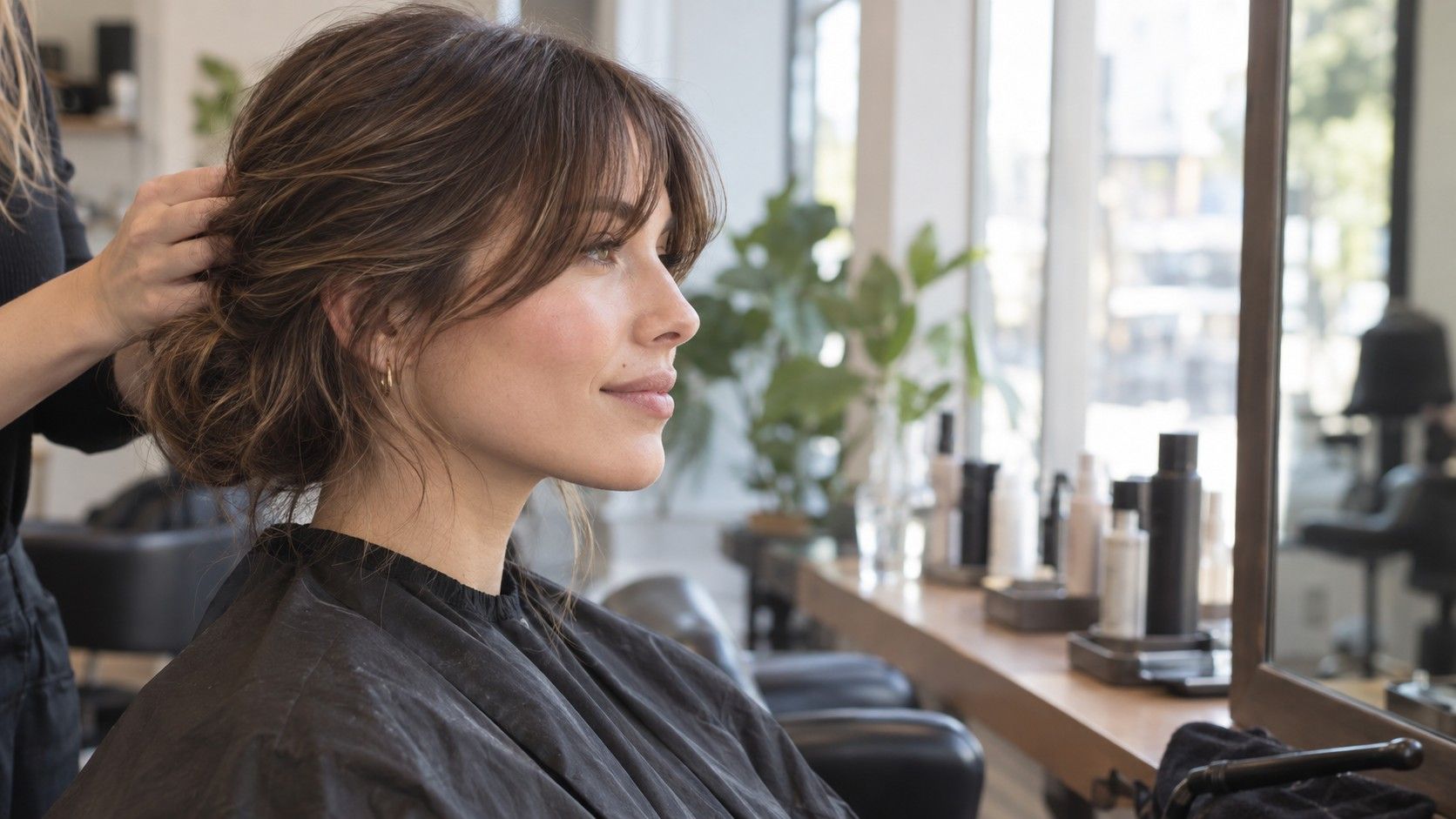
Bangs can interrupt a long vertical line at the forehead, but they are an option rather than an obligation. A soft full fringe, a textured fringe, or curtain bangs with enough width can all change the balance. The right choice depends on hairline density, cowlicks, glasses, and whether you are willing to style the front every morning.
Side volume is usually more helpful when it comes from shape than from teasing. A small bend around the cheekbone, a side tuck, or waves that begin below the root can widen the visual outline without turning the crown into a tower. If you have natural waves, do not iron them flat before deciding whether the haircut works; they may already supply the movement you need.
Parting is a quiet but powerful adjustment. A strict centre part can look sleek, though it may lengthen the central line. Moving it a centimetre or two off centre introduces asymmetry and often makes the whole style feel less formal. Try this at home before the appointment so you know what you genuinely like.
Avoiding accidental extra height
The usual warning about height is not a command to flatten the hair. It is about proportion. A small crown lift can be elegant, particularly when the sides have movement too. Problems arise when the top is built high and narrow while the lengths are pressed close to the face; the silhouette then points upward rather than outward.
Watch for haircut language such as “lots of lift” or “short layers for volume.” Those can be good ideas, but ask where the volume will live. For an oblong starting point, cheekbone- and side-level movement is often more useful than a dramatic boost at the crown. A stylist can adapt the same layer pattern by changing the elevation and the weight left behind.
Your daily drying method is part of the design. Drying every section up and away from the scalp creates height by default. Alternating the direction at the roots and then letting the sides settle can make the result feel fuller without becoming taller. It is a small technique change with more impact than many new products.
Bring a decision-focused salon plan
Say what you want the haircut to do: perhaps add side presence, make a long length feel less severe, or give you a bob that still tucks behind the ears. Then tell the stylist how you normally style and how often you are happy to book trims. These facts let them translate an inspiring photo into a cut with a realistic maintenance level.
Ask them to point out the shortest layer, the strongest weight line, and the point where the face framing begins. You do not need technical mastery; you are checking that the shape they describe matches the shape you want to see. A clear explanation also makes later adjustments easier because both of you have a shared reference.
Bring two or three photos that show the finish you like, but also say what you do on an ordinary Tuesday. A reference made with a blow-dry, extensions, and studio light can still be useful; it is simply not a promise about your own hair. Ask the stylist which part of the shape is cut in and which part depends on styling. That question usually produces a clearer conversation than asking whether a particular cut is universally flattering.